

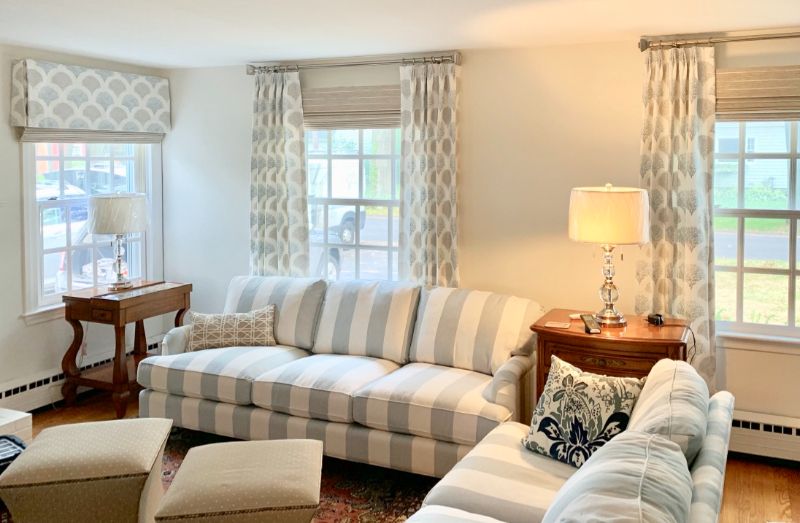
Layering window treatments sounds like something only designers do.
In reality, it’s one of the simplest ways to make a room feel finished, if you do it right. The problem is that many homeowners either avoid layering entirely because it feels complicated or they overdo it and end up with windows that look heavy and crowded.
The goal isn’t to add more fabric for the sake of it. It’s to balance softness, function, and proportion. When shades and drapes work together, the window feels intentional. When they don’t, it feels like two separate ideas fighting for space.
Here’s how to get it right without turning your windows into a fabric experiment.
Start With Function, Not Fabric
Before thinking about color or style, think about what the room needs.
Is this a bedroom that needs darkness?
A living room that gets harsh afternoon glare?
A dining room where privacy matters more than light control?
Shades usually handle the functional side of things. Drapes add softness and visual framing. When you approach layering with that mindset, it becomes less about decoration and more about solving a problem.
For example, sheer roman shades are ideal when you want filtered light during the day without sacrificing privacy. They soften the window but don’t completely block brightness. In that case, drapes can serve as the secondary layer — adding warmth and dimension while remaining open most of the time.
Once you understand the purpose of each layer, the design decisions get easier.
Keep One Layer Simple
The biggest mistake people make when combining shades and drapes is giving both equal visual weight.
If your shades have pattern, texture, and strong color, your drapes should be quieter. If your drapes are bold, your shades should step back.
A common approach is to choose neutral, tailored shades as the foundation. Gray window roman shades, for example, can anchor the window without demanding attention. Gray is flexible enough to blend into both warm and cool palettes, and when kept simple, it won’t compete with surrounding decor.
Then, if you want personality, you can introduce it through the drapery fabric. Or keep both layers neutral and let texture do the talking. The key is contrast in weight, not chaos in pattern.
Pay Attention to Proportion
Layered window treatments only look polished when the proportions are right.
Shades should fit cleanly inside the window frame (or just outside, if that’s the style), and drapes should extend beyond the frame to create width. Hanging drapery rods higher than the window trim helps elongate the wall and prevents the layers from feeling cramped.
If everything is mounted at the same narrow width as the window, the result can feel tight and heavy. Give each layer breathing room.
Fullness matters here too. Drapes need enough fabric to stack neatly when open. If they look stretched thin, layering won’t save them. Proper proportion is what makes layered windows feel intentional instead of accidental.
Think About Light Throughout the Day
Layering isn’t just about aesthetics, it changes how a room behaves from morning to night.
During the day, you might rely on the shades to filter light while leaving the drapes open. In the evening, the drapes can close for added privacy and warmth.
This flexibility is one of the biggest advantages of combining treatments. Instead of committing to one level of brightness, you create options.
When choosing living room window treatments, especially, the range matters. Harsh midday sun can be softened with shades, while drapes can frame the space beautifully when open. At night, closing both layers creates a sense of coziness that a single treatment can’t quite replicate.
Avoid Overly Bulky Fabrics
Layering already adds visual depth. Heavy, thick fabrics on both layers can quickly overwhelm a space.
If your shades have structure, like roman shades with defined folds, choose drapery that complements rather than competes. Linen blends, cotton, or lightly textured fabrics usually work better than stiff, overly formal materials.
The goal is softness and movement, not weight.
When both layers feel too thick, the window can dominate the room in a way that feels unbalanced.
Match Undertones, Not Exact Colors
You don’t need the drapes and shades to match perfectly. In fact, exact matches can look flat.
Instead, focus on undertones. Warm gray shades pair well with warm neutrals. Cooler grays work with crisper whites and cooler palettes. If your drapes have subtle pattern, pull one of the secondary tones into the shade color.
This approach keeps the window layered but cohesive.
Think harmony, not duplication.
Let the Room Guide the Decision
Some rooms need drama. Others need restraint.
In a formal dining room, layered treatments can feel elegant and polished. In a small bedroom, keeping things lighter and simpler might be more appropriate.
There’s no universal formula. The architecture, ceiling height, furniture scale, and even how much natural light the room gets should influence your choices.
Layering works best when it supports the space rather than overpowering it.
The Real Secret: Keep It Intentional
When shades and drapes are chosen independently without a plan, the window can look pieced together. But when both layers are selected with proportion, light, and balance in mind, the effect feels seamless.
Layering isn’t about adding more. It’s about adding purpose.
A tailored shade provides structure. Drapes bring softness. Together, they frame the room in a way that feels complete, not cluttered.
If you keep one layer simple, respect proportion, and choose fabrics that complement rather than compete, combining shades and drapes doesn’t have to feel complicated.
It can just feel right.
